
The island that licenses illegal betting around the world
Curaçao sells cheap licences to offshore operators that routinely take bets in countries that never authorised them. A 2024 law promised to clean that up; a Play the Game investigation found empty offices, unpaid winners, and a regulator unwilling to answer questions in person.
Edited on 14 September 2026. See the editor's note at the bottom of the article.
By Steve Menary and Samindra Kunti, reporting from Willemstad, Curaçao. Additional reporting by Philippe Auclair, Jack Kerr and Matthijs van Dam
From the balcony of Cafe Gouverneur De Rouville, George Lichtveld overlooks St Anna Bay – the canal connecting the Caribbean Sea and the Schottegat, the giant natural harbour at the heart of Curaçao. The picture he paints of the island is far removed from the holiday destination most visitors come for.
“Curaçao is situated in a toxic environment,” Lichtveld, a former senior civil servant in Curaçao and veteran critic of the gambling industry’s grip on his home, tells Play the Game. “We are surrounded by cartels from places like Mexico and armed groups like the [the old] FARC from Colombia. It’s quite obvious that something is going on [here], but the government and the judiciary are not interested in investigating.”
This characterisation is not Lichtveld's alone. The Caribbean branch of the Financial Action Task Force (FATF) – the global watchdog on money laundering, terrorist financing, and the financing of weapons of mass destruction – classified the nation’s risk for domestic and international money laundering as medium-high. Their 2025 report, based on research conducted in June 2024, states that “Given its strategic location, Curaçao is particularly susceptible to money laundry activities related to drug trafficking, notably from the United States, Venezuela, and the Netherlands. Moreover, domestic sources of illicit funds stem from illegal gambling, tax evasion, and fraud. Sectors facing the highest ML risk in Curaçao include financial institutions, real estate, online gambling, and ezones.”
Curaçao's own government reached similar conclusions: a national anti-money laundering strategy published in June 2024 identified online gaming as a high-risk sector and acknowledged that years of bank de-risking had left "significant amounts of money flowing through this industry with little visibility."
Lichtveld has watched his island home become a hub for a giant illegal* online sports betting industry. Play the Game travelled to Curaçao to investigate and found that operators use Curaçao’s remote gambling licences to expand globally, without Curaçao levying a gaming-revenue tax on their betting income.
Research traces the origins of Curaçao’s offshore system back to World War Two, when trusts were set up on the island to help Dutch businesses in Europe keep their assets away from invading Nazi forces. After the war ended, Lichtveld argues, the island joined a handful of other Caribbean islands in offering gambling to attract tourists.
“Other islands were very hesitant to have casinos as they were associated with the mafia,” adds Lichtveld. “The [old] Intercontinental Hotel [in the capital Willemstad] was allowed to provide a casino, but the government said, ‘We will not provide a licence; you need to do that yourself.’”
After Curaçao’s telecoms infrastructure was upgraded, in 1993, the island created an offshore licensing system, the Landsverordening buitengaatse hazardspelen (LBH), or National Ordinance on Offshore Games of Hazard. Online sports betting and casino operators followed.
Through the LBH, four private companies – among them Cyberluck and Antillephone – gained master licences and issued sub-licences of their own, but concerns rose over lack of transparency and anti-money laundering controls.
Fuelled by a network of data centres that belies the island’s population of roughly 155,000, thousands of domains sprang up offering betting in countries where their operators held no licence. Curaçao-licensed operators became a byword for illegal betting* – which the Macolin Convention, the only rule of international law on the manipulation of sports competitions, defines as any “wagering activity where the type or operator lacks authorisation under the local laws of the consumer's jurisdiction.”
The LBH drew sustained criticism for facilitating money laundering, and by 2020 the Netherlands had made reform of gambling supervision one of the conditions of COVID-19 liquidity support. In December 2024, new legislation came into force – the Landsverordening op de Kansspelen (LOK), or National Ordinance on Games of Chance, intended to address these issues.
With the LOK, Curaçao's Gaming Control Board (GCB) was designated as the Curaçao Gaming Authority (CGA) and given its new statutory role and powers. One aim was to help comply with the FATF.
“A smokescreen”

Street art in Willemstad. The island of 155,000 people hosts more than 600 gambling licences. Photo: Steve Menary.
The LOK was introduced by then finance minister Javier Silvania, who quickly attracted controversy for recruiting a team of Malta-based consultants to build the new licensing regime. Among them were Mario Galea – former head of Malta’s Lotteries and Gaming Authority (LGA), which was renamed the Malta Gaming Authority (MGA) in 2015 – and Aideen Shortt, a Public Relations advisor. Galea was accused by local media of a conflict of interest after allegedly suggesting licence applications be routed through an entity linked to him.
Galea co-authored Malta's 2004 Remote Gaming Regulations but twice resigned from senior positions at the LGA, in 2008 and 2013. Like the LOK, the Mediterranean Island’s offshore licensing system serves markets where they hold no local authorisation. And while Malta contests the Macolin Convention's view that the practice is illegal, it has required its licensees to report suspicious betting since January 2021.
Galea’s company, Random Consulting Limited (RCL), was recruited by Silvania, who resigned in October 2025 after a leaked recording of a disagreement with the head of the island's tax office. His political troubles predated that. In November 2024 – before the LOK entered into force – forensic investigator Luigi Faneyte filed a 400-page criminal complaint accusing Silvania of fraud, embezzlement, money laundering, and abuse of office around the issuing of provisional gambling licences during the transition to the LOK framework.
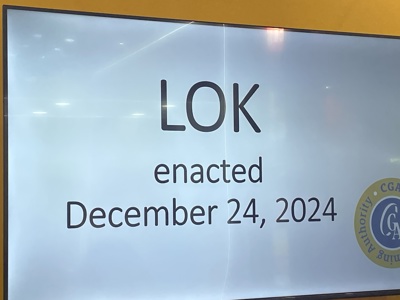
Slide from the Curaçao Gaming Authority’s presentation of its new gambling law, the LOK, at the ICE trade fair in Barcelona in 2025.
In a café at Wilhelmina in central Willemstad, Faneyte tells Play the Game he has still not received a response from the authorities since filing the complaint and argues that the LOK has failed to meet its aim.
“The two main goals were that the licence fee gets to the people through the tax office and to restore the reputation of Curaçao as the first offshore gambling destination, but the new law has not achieved that,” says Faneyte. According to the CGA, the LOK is meant to ensure “a safer, more transparent, and better-regulated” industry.
“External parties gained access to the licensing process for gambling operators worldwide. Galea provided the infrastructure, and there were strong indications that he manages the system and that Aideen Shortt is the voice,” says Faneyte, who in his complaint describes Shortt as Galea’s life partner and a fellow RCL employee – a claim Shortt strongly rejects. “Provisional licences were being approved without due diligence and payment processes, despite previous red flags.”
In his complaint, Faneyte claimed that RCL was in effect deciding which licences were approved. Responding to Play the Game, Random said it played no part in deciding which companies were awarded licences. It also rejected the allegation that it runs the CGA, arguing the agency retains oversight of enforcement. “RCL provides technology, technical expertise and professional support to the CGA. It does not exercise the statutory powers of the regulator,” the company said. “RCL cannot grant, refuse, suspend or terminate a licence; all regulatory decisions remain exclusively with the CGA.” Play the Game makes no allegation of wrongdoing against RCL or anyone named in the complaint, and reports only that a complaint has been filed. No charges have been brought. RCL’s full response to Play the Game can be read here.
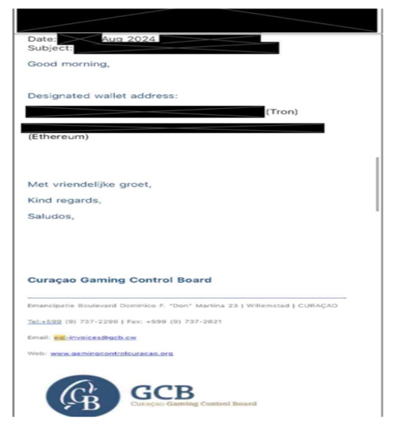
An email from the Gaming Control Board, the CGA's predecessor, giving Tron and Ethereum wallet addresses for payment. Redacted document from Luigi Faneyte's criminal complaint.
“The LOK is being used as a smokescreen. This type of reporting [his complaint] does not happen here. In the past, one person did this, and he ended up dead,” says Faneyte. He is referring to Helmin Wiels, an anti-corruption activist and former leader of the Pueblo Soberano party, who was shot dead in May 2013. Before his death, Wiels had publicly spoken about exposing individuals involved in Curaçao’s underground economy, including gambling. Faneyte’s comparison reflects his own concerns about the risks of speaking out; Play the Game has found no evidence establishing a connection between Wiels’ murder and those statements.
Since making his allegations, Faneyte has been in touch with intelligence agencies in Curaçao and in the Netherlands about his personal safety.
The memorial to Helmin Wiels outside Willemstad. The politician was shot dead in May 2013, weeks after promising to name those behind the island's underground economy, gambling included. Photo: Steve Menary.
In December 2024, Faneyte launched a whistleblower website and received user complaints about Curaçao licence holders from the U.S., Canada, the Netherlands, Spain, Portugal, the UK, Japan, Australia, and New Zealand. He eventually took the website offline due to the volume of complaints but says he is using the material as the basis for another criminal complaint to the prosecutor’s office about the LOK.
The ghosts of Willemstad
The LOK was initially supposed to require licence holders to employ staff on the island. But the CGA formally postponed Article 5.12's local-substance requirement until 1 April 2027, and trust offices continue as a local representative – as Play the Game’s tour around Willemstad confirmed.
Play the Game’s visits to some of the island’s data centres swiftly attracted suspicion. A tour around addresses of domains linked to 1xBet – a Russian-controlled, Cypriot-based operator described by the Council of Europe as the "Wagner Group of Illegal Betting” with a track record of letterbox offices – found the same problem in Curaçao. Receptionists at trust offices confirmed the address matches the holding company listed on the licence, but no one is ever available. After one visit, a member of staff hurries out after the reporters: “Tell me why you want to know this, why are you here?”
Two Willemstad addresses registered to holders of Curaçao gambling licences. Photo: Steve Menary.
In one case, a trust office had moved, but the change was not updated on the company’s website. At the abandoned house, the post box lolls open. Inside are an empty bottle of rum and legal letters from Austria and Germany, where Curaçao-licensed operators have targeted local bettors but, players allege, failed to pay out their winnings.
“A shrouding technique”
According to Shortt, there are direct provisions in the LOK regarding match fixing and suspicious betting. The new Curaçao licensing system establishes reporting obligations on operators. But Play the Game found a continuing gap between Curaçao-licensed operators and sports integrity bodies.
Senior sports integrity officials with decades of experience dealing with match-fixing across major sports, including football and cricket at a national and international level, said they never received notifications of suspicious betting from offshore betting companies licensed in Curaçao.
“I am pretty sure that has never happened,” said Dan Korhonen, integrity officer at the Swedish Sports Confederation. Alex Marshall, general manager of the International Cricket Council Integrity Unit for seven years until 2025 and now working in integrity in Bangladesh cricket and in biathlon, said he had never received any information about suspicious betting from Curaçao-licensed betting companies. Jakub Čavoj, integrity officer at the Slovak Football Association, said he received reports from local betting companies but “almost never from [any] operators abroad.”
The Group of Copenhagen – the global network of National Platforms assembled by the Macolin Convention to combat the manipulation of sports competition – confirmed to Play the Game it had never received alerts of suspicious betting from Curaçao-licensed betting operators and that this had not changed since the introduction of the LOK.
Trust offices on Curaçao must register with the island’s Financial Intelligence Unit (FIU) and flag transactions under two sets of indicators: objective and subjective.
An objective indicator sets out the circumstances in which a transaction must be treated as unusual, while subjective indicators apply when the reporting entity has reasonable grounds to believe that a transaction may be related to money laundering or terrorist financing.
“If you are established in Curaçao, you are supposed to have a local bank account,” Peter Comello, a former assistant prosecutor in the Dutch police, tells Play the Game. “But the trusts use corporate service providers, so there is no oversight.”
“The money launderers know very well which channels to use: gambling operators will often be controlled by a trust, and behind that is another legal entity. That is a shrouding technique,” adds Comello, who has also worked in FIUs in Curaçao and in the Netherlands. “As an FIU officer, you ask countries for information and hit a wall. The CGA is supposed to be researching these entities, but whether that is happening in practice, who knows?”
Curaçao’s FIU has limited staff capacity, according to the FATF. Play the Game asked a series of questions to Curaçao’s FIU, including how many suspicious transaction reports it receives in connection with trusts controlling betting companies. No reply had been received by the time of publication.
Diligence not due
An undercover investigation by Sveriges Radio in 2025 explored how much due diligence Curaçao authorities apply before granting licences. In a covertly recorded conversation from 2024, when the former system was still in place but the LOK was looming, Shortt promoted Curaçao as a regulatory regime offering “lower demands” on responsible gambling and anti-money laundering rules.
Narrator: I ask why everyone is telling me to go to Curaçao if I want to start a casino for Swedish customers, but without a Swedish licence.
Aideen: The reason probably is because we are not putting any restrictions as to where you can or can’t do business.
Narrator: We don’t care where you do business, says Aideen Shortt. I ask her: Do you have lower demands than Sweden for example, in order to get a licence?
Aideen: Yes, lower demands…
Reporter: On? Responsible gambling…
Aideen: Yes and AML.
Reporter: Anti-money laundering…
Aideen: Yes, but lower demands in the sense that we have a base level. You are taking your bets in Curaçao…
Narrator: We have lower demands for responsible gambling and for counteracting money laundering, she says. The laws that apply are Curaçao laws, not other countries’ laws.
Reporter: So you can do whatever you want as long as you follow what Curaçao wants, but that is apparently not what the Swedish people would want.
Aideen: Yes, you’re adhering to the law of the country that you’re in.
Reporter: OK, so you say, keep to the local laws, but we will not check if you do?
Aideen: We expect you to conduct yourself legally at all times. But we believe in the good of the industry.
Asked about the recording, Shortt said Sveriges Radio had not given her a right of reply. Her full response to Play the Game can be read here. Sveriges Radio's producer told Play the Game that she was in fact offered one and this was broadcast in the series.
One licence, multiple sites
Besides the controversy involving Galea’s RCL, Faneyte’s complaint names another Maltese citizen: Mario Fiorini, chief executive of the trust group IGA. The two will face off in court in Malta in October 2026, in an action brought by Fiorini over Faneyte’s allegations.
According to Random, as of late July 2026, the 617 licences awarded under the new LOK system generated an annual revenue of around 34 million USD, plus another 3.5 million USD in application fees – in total, around 37.5 million USD. That is lower than the licensing revenue per licensee in some other offshore gambling jurisdictions.
Malta, for its part, does not operate a sub-licensing system: multiple companies can be covered by a single MGA licence through its corporate group licence framework. The MGA collected around USD 95.5 million in revenue in 2025, while overseeing more than 300 remote online gaming licences. That larger income pays for a bigger enforcement team: the MGA employs around 170 staff. The CGA has fewer than 30, excluding outsourced technical capacity, according to sources Play the Game interviewed. By comparison, the Dutch Gambling Authority employs around 100 staff and issued 22 online gambling licences in a year.
Under the CGA's fee schedule, a Curaçao operator pays €47,450 (about 55,400 USD) a year – €24,490 (about 28,600 USD) as a licence fee to the National Treasury and €22,960 (about 26,800 USD) as a supervisory fee to the regulator – plus a one-off application fee of €4,592 (about 5,400 USD). There is no separate tax on gaming revenue. Malta charges an annual licence fee of €25,000 (about 29,200 USD) and an application fee of €5,000 (about 5,800 USD), on top of a revenue-based compliance contribution and a 5% gaming tax.
The crucial difference is that for €250 (about 290 USD), a Curaçao licence holder can apply to add an extra domain to an existing licence. The domain must be approved by the CGA, but no separate gaming licence application is required.
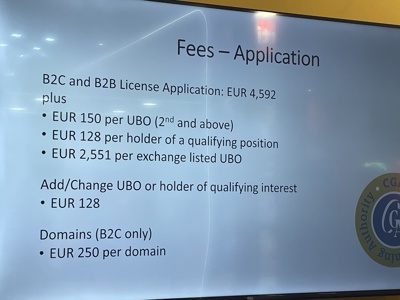
The CGA's own price list, shown at the ICE trade fair in Barcelona: 250 euros (~290 USD) to add each additional domain to an existing licence.
Sources claimed that more than 10,000 domains were linked to the old GCB licences in 2021. Data obtained by Play the Game from Casino Guru, which runs an online guide to casinos, suggests the LOK has perpetuated that system in a different form: under the new regime, existing licence holders can register new domains themselves, again supervised by a private company.
Casino Guru identified 878 casino domains relying on CGA licences, compared with 617 licences issued at the time of its research. The figures illustrate how multiple domains can operate under a single licence. Under the LOK, additional domains require CGA approval but not a separate gaming licence.
“The new LOK is a show thing for the rest of the world because they do not have the manpower – Curaçao cannot handle this,” says Lichtveld.
LOKed out
Operators with a Curaçao licence frequently use sport to attract customers, who may then struggle to collect their winnings. “Most [operators] don’t have sound procedures for the protection of gamers,” adds Faneyte. “We are getting a lot of customers in our courts – and in courts around the world – who are not happy because the [betting companies] are not respecting the laws of the countries they are operating in.”
One recourse for bettors denied winnings by offshore operators is through Alternative Dispute Resolution providers (ADR), which try to negotiate a settlement. Under the LOK framework, operators must provide access to a CGA-certified ADR for unresolved complaints. Players nevertheless continue to seek help from complaint and mediation services outside the formal CGA system.
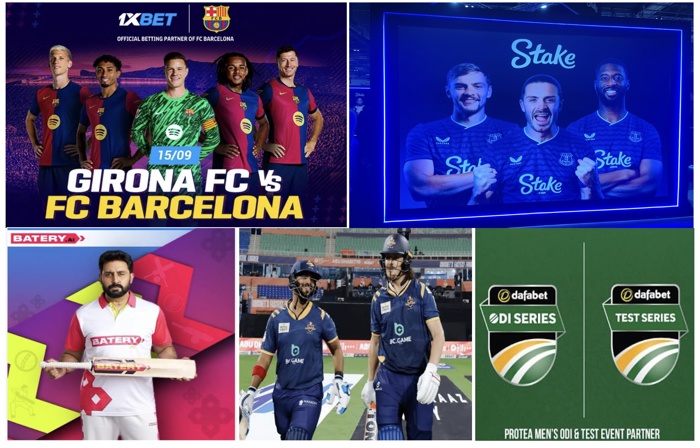
One such service, AskGamblers, helped recover 10.7 million USD for players in 2025, up from 6.9 million USD in 2024. The five most-complained-about operators on its list were all licensed in Curaçao and are all major sponsors of sport – particularly football and cricket – marketing to bettors in countries such as China and India, where online gaming is mainly prohibited.
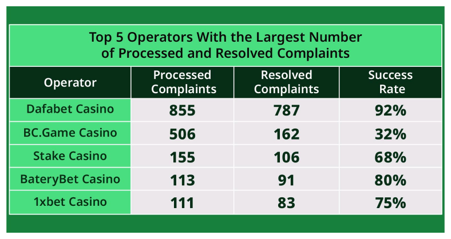
Casino Guru, another independent complaints and mediation platform, received 2,316 complaints about online casinos with a Curaçao licence over the past 12 months. In 19% of those cases, the operators did not take part in the resolution process.
“Complaints on online casinos licensed by the CGA have remained [at a] considerable amount over the past 12 months: they represent more than a third of all complaints that Casino Guru handles,” says Simon Vincze, head of sustainable and safer gambling at Casino Guru. “Positively, more than 80% of them end up resolved, which means that the casino has followed our complaints resolution.”
“[The] top reasons why people complain remain delayed payment, verification, and self-exclusion cases, which are on the rise,” he adds.
Cases involving players chasing unpaid winnings through the old system routinely crawl through Curaçao’s judiciary. Play the Game visited the court at its temporary premises on Emancipatie Boulevard Dominico F. “Don” Martina, while a new building is being constructed. One Spanish bettor is appealing against a refusal to pay him about 294,000 USD. His claim is against Santeda, a network of betting operators that was sub-licensed by Cyberluck and includes DonBet, Goldenbet, MyStake, and Velobet.
Santeda, which operated under the former sub-licensing system, faced bankruptcy proceedings in Curaçao, as also happened to Barcelona sponsor 1xBet and BC.Game, which sponsors Leicester City. The judge ruled against the Spanish bettor, but instead of the two sides meeting in open court, a decision was taken in private and communicated later by email due to what a clerk describes as the summer recess.
Offshore for Europeans, by Europeans
The export market drives Curaçao's gambling industry. Random Consulting says the CGA generates more than 29 million euros a year (~34 million USD) - roughly 1 per cent of Curaçao's GDP of about 3.6 billion USD.
An offshore Curaçao licence doesn’t expressly entitle its holder to offer services into any particular jurisdiction. In fact, many, if not most, countries go to great lengths to protect their citizens from these very types of services.
Few more so than Iran, where gambling is punishable by lashings, online gambling has been the subject of tougher controls in recent years, and even a television game show was pulled for offering a cash prize. This is not the only trouble for bookmakers eyeing Iran: along with North Korea and Myanmar, it is blacklisted by the FATF over concerns including terrorist financing.
Yet Iran is the target market of a Curaçao-licensed operator called Betfa. Only users with a telephone number beginning in +98, the country code of Iran, can register to use the site. Farsi (aka Persian) is one of the four languages available on the site, along with Kurdish, Turkish and English.
Despite gambling restrictions in the sole country where it can be used, Betfa offers live and pre-match sports betting, slot machines, live casino games and other related gambling services. Betfa is, according to its terms and conditions, “a place to play, have fun, and enjoy gaming safely”.
Business registry documents show that Betfa is directed through a trust run by the co-founder and local operations chief of an iGaming consultancy based in Malta, with strong links to Curaçao and the Netherlands. “Ensure your iGaming business is licensed and compliant in key jurisdictions”, its website says.
The consultancy said it was investigating the matter, and clients are strictly prohibited from operating in FATF-listed and sanctioned jurisdictions. “Compliance with these restrictions is not optional, and we take any indication of a potential breach seriously,” a spokesperson said.
Another bookie using the same licence also offers services in Farsi and gives Iran’s country code as the first option on its registration page. After Play the Game's enquiries, the CGA certificate page previously linked from the sites was no longer available. Play the Game has not established whether this reflected a change in the underlying licence or in the approval of the individual domains.
Other sites seen by Play the Game target users in Norway, Singapore or the USA, or used an internet domain of the European Union (.eu) or one of its member states (Latvia’s .lv).
Multiple sites were accessible from Australia, whose Interactive Gambling Act prohibits bookmakers without a local licence from offering their services in the country, and also prohibits operators of any jurisdiction from offering online casino games or online in-play sports betting. Australian news reports also claim local influencers have been promoting a Curaçao-licensed bookie, and a related website says it can help Australian users deposit Australian dollars.
It's a continuation of an old problem. Australia’s online gambling watchdog found that dozens of Curaçao-licensed bookies had breached national law under the old licensing regime. Documents released under Freedom of Information show it engaged in dialogue with authorities in Curaçao about dealing with the issue.
There is a Danish connection, too. As part of this investigation, Josimar published an investigation showing that the Honorary Consul of Denmark in Curaçao was operating a trust linked to a porn-producing bookmaker. That same day, a new person was announced in the role.
Not in Line
CGA regulations require operators to “strictly adher[e] to” the laws and regulations of countries where they offer their services, but enforcement is less certain. Operators like LineBet, a holder of a Curaçao licence No. OGL/2024/565/0553, shared at a major industry event – the 2026 iGB conference in London – that it targets markets where sports betting is banned or reserved to the state.

LineBet's stand at the iGB trade fair in London in 2026, advertising for traffic from 24 countries – Iran and India among them, where the company holds no licence.
Those markets include Iran and Somalia, where sports gambling is illegal, and Morocco, where online sports betting is a state monopoly. Egypt, meanwhile, is moving to criminalise the practice. LineBet holds no domestic licence in any of these nations. Nevertheless, it openly targets those markets, using sport as a promotional tool: its sponsorship deals include football giants AS Monaco and Spain’s Athletic Club Bilbao.
Similarly, a large underground betting market operates in India, particularly for cricket – a sport in which LineBet has invested heavily. LineBet sponsors the Bulawayo Brave Jaguars in Zimbabwe and the Durban Super Giants in South Africa, and has signed the former England star Dawid Malan as an ambassador. In 2025, LineBet sponsored the World Championship of Legends, a veterans series played in the UK, where external integrity monitors flagged matches for suspicious betting.
Play the Game reviewed more than fifty Curaçao-licensed operators and found commercial links to Europe through their sites: from casino game producers in Scandinavia to money handlers based in the Mediterranean, and live sports data providers in Switzerland, Poland, and the UK. While Europe leads the way in some areas of the fight against offshore betting (the Macolin Convention, for instance), Europe also provides its foundation.
Questions only by email
To get answers to the questions raised in this investigation, Play the Game visited the CGA’s office in Willemstad, which at first appeared empty. After 15 minutes left baking in the Caribbean sun alongside a team of consultants with an appointment to look into database issues, a CGA staffer finally let everyone in.
After the consultants traipsed off to help with the database, the receptionist called a member of staff, who explained that no one was available then or at any other time. “That is how we work at this organisation,” Play the Game was told. Questions could only be asked via email. Play the Game sent a detailed list of twenty questions on July 30. The CGA replied nearly a month later; its response can be read here.
The Curaçao Gaming Authority's offices in Willemstad. Play the Game was told no one was available to answer questions "now or at any other time". Photo: Steve Menary.
What’s left for sport
Meanwhile, Curaçao-licensed operator 1xBet offered bets on an amateur midweek cricket competition played at Hornchurch in East London in early August by teams such as the Fearless Lions of West Ham, who otherwise play Sunday friendlies.
Amateur cricket in London on offer for betting on Curaçao-licensed betting websites.
A low-level amateur series is exactly the type of sporting event that betting companies are advised not to offer bets on. In June 2026, the Follow-up Committee to the Macolin Convention approved guidelines encouraging states and regulators to adapt betting offers to the risk involved, noting that several countries already exclude amateur sport and under-18 competitions from betting markets.
UK-licensed operators, on whose doorstep the matches are played, do not offer the games in East London but Curaçao-licensed operators do: the games are streamed live on YouTube, and that makes them simply more content. During this competition, one match alone saw more than 545,000 USD wagered.
Given how little oversight the system provides, staying alert to the problems created by illegal betting is about all sport can do.
Illegal betting is a major driver of corruption in sport. The United Nations Office on Drugs and Crime’s estimates place the amount wagered on illegal betting markets between USD 340 billion and USD 1.7 trillion. The problem of illegal betting is only getting worse. In Europe alone, the size of the illegal betting market tripled between 2019 and 2025 according to recent research by Helios and Regulus Partners.
Curaçao’s reforms have strengthened the regulatory framework on paper. The question raised by Play the Game’s investigation is whether the new system has the capacity and willingness to enforce those rules across an offshore industry operating far beyond the island.
Dutch police are present on the island and interested in the gambling sector, but George Lichtveld is not confident of an intervention. “It’s well-protected by the Dutch government because it’s all about their mentality,” he reflects. “Holland has always been half pirate and half priest. They are the first to point the finger and talk about morality, but they are involved in some of the worst things.”
*Illegal betting as defined by Article 3 of the Macolin Convention.
This story is part of ‘Curaçao: The EU outpost driving the global offshore betting market’, which is a collaboration between Play the Game, Josimar, and Trouw. Other stories in the investigation can be found here and here.
The production of this investigation was supported by a grant from the Investigative Journalism for Europe (IJ4EU) fund.
This publication reflects only the author's view and the European Commission is not responsible for any use that may be made of the information it contains.
Play the Game reviewed this article on September 14, 2026, in light of a detailed response from Aideen Shortt, and re-examined the article against the underlying documents and sources.
Changes were made where factual matters required correction or clarification. Most concern the distinction between Curaçao's former licensing system and the regime introduced by the National Ordinance on Games of Chance (LOK) in December 2024.
The principal corrections and clarifications are set out below. An earlier version of this article:
- stated that the Curaçao licensing system does not require the reporting of suspicious betting. The LOK does impose reporting obligations; what this investigation establishes is that sports integrity bodies say they have never received such reports from Curaçao-licensed operators.
- stated that the LOK required licence holders to employ staff on the island and that operators were continuing as before. The Curaçao Gaming Authority had formally postponed compliance with the relevant local-substance requirements under Article 5.12, until 1 April 2027.
- cited a 2025 report by the Caribbean Financial Action Task Force as evidence of shortcomings since the LOK took effect. The report was based on an on-site assessment conducted in June 2024, before the LOK entered into force. The article has been revised to make that chronology clear.
- described Mario Galea as a former head of the Malta Gaming Authority. He led its predecessor, the Lotteries and Gaming Authority, which was renamed the Malta Gaming Authority in 2015.
- stated that more than 10,000 domains were currently linked to Curaçao licences. The figure cited derives from research published in 2021 and relates to the former licensing system. The article now identifies it as a historical figure and includes newer data separately.
- described Alternative Dispute Resolution providers as the only recourse available to bettors denied winnings. The article has been revised to make clear that alternative dispute resolution is one of several possible routes for redress.
- dated the covertly recorded conversation broadcast by Sveriges Radio to 2025. It was broadcast in 2025, but recorded in 2024, before the LOK entered into force.
- stated that up to 1.7 trillion USD was wagered on illegal betting markets in 2023. The United Nations Office on Drugs and Crime estimates the annual figure at between 340 billion and 1.7 trillion USD.
- stated that any transaction above one million Caribbean guilders must be reported to Curaçao's Financial Intelligence Unit under its objective indicators. The obligation is to report unusual transactions: objective indicators set out the mandatory circumstances in which a report is required.
Play the Game has also made a number of smaller factual and contextual amendments following the review.
Play the Game stands by the investigation as amended.


