
Whistleblowing from the Afghanistan evacuation: UCI’s repeated history of siding with abusers
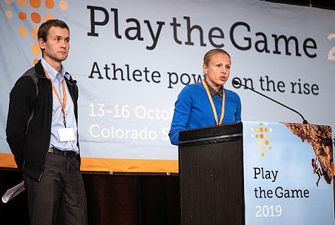
SPEECH: In her Play the Game address, human rights activist and founder of Combat Apathy Shannon Galpin recounts her experiences of blowing the whistle on abuse and corruption within Afghan cycling. She exposes how evidence was ignored, institutions stayed silent, and the cost of truth-telling continues to fall on those least protected.
So exactly 16 years ago today, I first mountain biked in Kabul, Afghanistan, and it is lovely to be here with all of you to speak about whistleblowing twice on behalf of Afghan cyclists.
At the time that I first started mountain biking in Afghanistan 16 years ago, it was still taboo for women and girls to ride bikes. I spent several years exploring the country and the gender barriers on my mountain bike while I was developing projects in women's prisons, girls' schools, and working with photojournalists and the deaf community.
And then I met Marjan Sediqi. She was the captain of the first Afghan National Women's Cycling Team. I was elated, and I immediately pivoted all of my projects in Afghanistan to support the team and the emerging right-to-ride movements, more independent teams, and bike clubs.
I spent the next four years funding, supporting and training with the first generation of Afghan women cyclists. But when reports of abuse and corruption by the president of the Afghan Cycling Federation, Coach Seddiqe, emerged, it became impossible to continue to support the national women's cycling team.
The first investigation in 2015, without any support from the UCI
In 2015, I began gathering evidence of theft and corruption. I investigated allegations of harassment, abuse, human trafficking, and prostitution, as well as threats of physical harm to both the men's and women's cycling teams.
When I first confronted Coach Seddiqe in front of the women's team, he tried to pivot and place blame on me. He accused me of lying to the team and made many other threats in an effort to sow distrust between me and the women I had been working with directly in Afghanistan for four years. He tried to isolate me from the women.
I contacted upper-level staff at UCI for guidance and support. I am a human rights activist, not a pro-cyclist, so I didn't have a blueprint for what to do next. I needed to sanction coach Siddiqui and remove him from a position of power. But despite multiple calls and emails, there was no offer or guidance on how to report abuse.
The men's cycling team organised and held elections after repeated emails were ignored by UCI. They were successful, but Siddiqe refused to recognise the election.
He declared no one could remove him from power. This was a position for life. He simply took the women's team with him. The men's team remained separate and stayed with their elected president, whilst the UCI chose to recognise Seddiqe and keeping an abuser in power despite repeated outreach from the men's team and myself.
Coach Siddiqe undermined my reputation in and outside Afghanistan
I returned to Afghanistan to verify allegations and gather more evidence from the NOC. Everyone confirmed everything on camera.
When Coach Seddiqe found out that I was back in country and meeting with the cyclist directly, he began spreading rumours around Kabul about me. This is not a place you want rumours being spread about you and soon I had death threats.
He spread lies, more lies to the women's team that I had supported for years, women that I rode with. He fractured trust, ruined my reputation all around Afghanistan and with the sports and human rights community outside of Afghanistan, so that he could remain in power.
The Afghan Cycling Federation collapsed at the same time that the women's team had been nominated for the Nobel Peace Prize and themselves as National Geographic Adventurers of the Year.
The Afghan cycling president impeded the evacuations of national cyclists
Fast forward to July 2020, where the National Women's Cycling Team appeared to rebuild under new leadership, the Afghan cycling president Fazli Ahmed Fazli.
According to Fazli, there were now over 200 registered cyclists within the federation in over seven provinces, independent from women-led teams and bike clubs. These were federation riders.
Then the Taliban walked back into Kabul. I helped gather the names and documents for thousands of athletes for evacuation lists across multiple sports. I reached out to Fazli for the list of these 200 registered federation cyclists.
These were women I did not know. He shared a list of 30 names. I already knew these names. What happened, I messaged, to the over 200 registered cyclists on the federation lists that you said you had. His reply, they're not real cyclists.
I set up safe houses in Afghanistan and Pakistan. I produced passports outside of Afghanistan and reverse-smuggled them in when the passport offices were closed, and I prepared for land evacuations. Fazli began to publicly discredit and harass me. He accused me of mental illness on social media. He doxxed a journalist.
He threatened Afghan cyclists who were asking him, the head of their federation, for help. He directly impeded evacuations of national and independent cyclists, both male and female.
UCI president David Lappartient gave Fazli a merit award. I reported the abuse and harassment to Lappartient directly since I was public about the harassment with journalists and on social media, and Lappartient had asked me to help with the UCI evacuation.
I repeated it when my entire list of cyclists including original national team cyclists like Marjan, was removed from the UCI evacuation. But when I dared to criticise I was gaslighted in the press conferences by Lappartient: I was a “disappointed woman.” Not a human rights activist with 15 years' experience working in Afghanistan.
No support from the UCI and the sports community to evacuate athletes
I evacuated over 200 athletes and family members, one carload at a time, and provided logistics for many other groups without their help and safeguarded them in Pakistan for nearly a year, some longer.
It took hundreds of thousands of dollars, not one penny from UCI or the sports community or the cycling community, they all came from crowdfunding from individuals.
The first family that I crossed overland to Pakistan was the Mohammadi family. Siblings James [Mahdi] and Reihanna Mohammadi were posted by the Afghan Cycling Federation's own post on social media in 2020. They were national team cycling members. They were two of the best-known cyclists in their country, and their older sister founded the first women's own independent team in Bamyan back in 2014.
Fazli denied James was a cyclist and directly tried to impede his evacuation. I've known that family since 2013. That's the only reason James got out. It cost us $40,000 and a team of lawyers in three countries to get them out, but they are now living together as a family in Germany.
Cyclists emailed UCI themselves to report abuse, harassment, threats, and discrimination during the evacuation. Cyclists at UCI headquarters complained directly to staff. Staff told them if they didn't like the situation, they could go back to Afghanistan. Cyclists in Bamyan with Team Oqab organised themselves.
The threats escalated. The online whistleblower portal was the next step, but it was not user-friendly if you don't speak English or French. It is also not user-friendly if all you have for evidence are voice messages and WhatsApp messages when you are a refugee fleeing for your life.
New investigation led to a UCI suspension of the Afghan cycling president
It was a journalist, an Australian cycling journalist, who pointed me towards the Ethics Commission. If it wasn't for that journalist, we might still be trying to find justice.
I gathered testimonies and assembled everything together a second time, almost eight years later, from the first time we tried to get justice from UCI. Lawyers took on the case pro bono. We funded and certified translations required by UCI at our own expense, and the investigation took two years, during which I was required to be silent or risk the case being dropped, further hindering the evacuations.
A guilty verdict was released quietly on their website just a few weeks before the Paris Olympics. The Ethics Commission never contacted me, never contacted the cyclists, never contacted the lawyers. They just posted a guilty verdict on the website. Despite the guilty verdict that confirmed concrete evidence of death threats and the worst case of abuse they had seen.
Fazli was given a 15-month suspension, which expires this month. We've attempted to appeal the case to CAS, but it hasn't even started yet. There have been no apologies, no reparations, no support for any of the cyclists that reported, or for the three that still need asylum that I've evacuated once, but who were pushed back to Afghanistan and are now in hiding again.
Wealthy men in power claiming women’s work as their own
A few months after the majority of cyclists were evacuated, UCI gathered them together in Switzerland where they were placed in Israeli Premier Tech jerseys. Muslim women were placed in Israeli cycling gear as a photo op with Sylvan Adams, the Canadian-Israeli billionaire, putting these Muslim women's lives at risk for a photo-op.
Two wealthy white men with enormous power and connections in cycling stood on stage, claimed my work as their own, and used Muslim refugees as a marketing tool.
What UCI has done to cover up abuse goes far beyond Afghanistan, but that's not my story, and I don't have the time, but just look to the African continent over the past two decades for horrifying stories of abuse much worse than this, and federation officials and staff who have had zero accountability.
We need to hold truth to power and demand accountability, not just from the federation or from UCI, but also from the sports and human rights community which has continued to allow this to happen by not demanding accountability.
The ecosystem for whistleblowers has made everyone's lives worse
The ecosystem for whistleblowers is isolating. It is career-ending. It has only made everyone's lives worse. Who has reported? Had I known how the legal system and sports community would let us all down, I would not have gone down this route, Shamsad and Ali Jan reported and gave us the testimony of the direct death threats that got us this guilty verdict.
They are both back in Afghanistan waiting for asylum. No one has offered them help other than what I am continuing to do.
But UCI certainly should be the ones trying to; they could offer them asylum, like they have done for others. They should be trying to help.
And I would say that while their lives have not been better for reporting, neither has mine as the whistleblower. It has only made my life worse. The gaslighting and the isolation, when compared with the career blacklisting, the near homelessness, and the financial devastation, have directly contributed to my mental and physical health.
Complicity within the sports and human rights community is a piece of the broader conversation we also need to address. There are several here at this conference who knew what was happening but ignored requests for advice or help and were actively complicit in order to maintain jobs or proximity to access and power.
And until we are willing to dismantle the systems that hold power and abuse athletes regardless of our own careers, the system will always win. Thank you.
Watch Shannon Galpin's presentation
The presentation formed part of the session 'Tell the truth and pay the price: How sport fails to protect its whistleblowers'