
FIFA World Cup 2026: In Trump’s America, nothing can be ruled out
Use burner phones. Beware of your social media. Have contingency plans. While thousands of reporters prepare to cover the FIFA World Cup, concerns grow over the Trump administration’s crackdown on critics and foreigners. Nick Harris from Sporting Intelligence takes a closer look at the risks journalists run.
The United States Immigration and Customs Enforcement (ICE) attracted global condemnation after the killings of Minneapolis residents Alex Pretti, a 37-year-old nurse, in January this year, which followed the death at the hands of federal agents of Renée Good, another 37-year-old America citizen, earlier the same month.
As The Guardian reported in late January, Pretti and Good were just two of eight people “who have either been killed by federal agents [in 2026] or who have died while in ICE custody [up to 28 January].”
The same piece reported: "The high-profile fatal shootings follow the deaths of at least 32 people in ICE custody in 2025 – the highest number since 2004.”
Since Donald Trump began his second term as US president, ICE has been focused on mass arrests and removals of “unauthorised immigrants”, and not just those with criminal records. This has involved “operations” in homes, workplaces and courthouses among many other situations.
How these operations will affect the men’s FIFA World Cup 2026 which kicks off on 11 June, in less than three months, is a question with growing momentum.
To which extent will ICE activities impinge on matches in the USA, if at all? Will fans or reporters covering the tournament, not least from nations perceived as enemies of America, will be at risk of ICE detention, violence, or even death.
As things stand at the time of publication, citizens from at least four of the 48 participating countries risk being banned from traveling to the USA, precluding visiting supporters and journalists from attending the tournament. Those four are Iran, Haiti, Senegal and the Ivory Coast.
So far, only players, coaches, (some) team officials, support staff, and immediate family members from restricted countries are exempted from the bans and will be granted entry/visas for the tournament.
Asked by Play the Game, FIFA both denies and confirms that journalists from certain countries may get into trouble:
“Media accreditation is open to media from all countries. No nationalities are blocked. Ability to enter Canada, Mexico and the USA are consular and immigration matters and not with FIFA,” a spokesperson writes.
No promise of press conferences
Meanwhile, FIFA has come under scrutiny because of FIFA president Gianni Infantino’s increasingly close relationship with US president Donald Trump. Infantino awarded FIFA’s inaugural “peace prize” to Trump, who has since started wars against the leaders of perceived enemies of the USA, Venezuela and Iran, while threatening other nations, including Colombia, Cuba, Mexico, and Denmark.
But it may not be easy to hold FIFA and its president to account. Asked if FIFA, like the International Olympic Committee, will hold daily press conference during the World Cup, the answer is evasive:
“FIFA has a dedicated mailbox for all enquiries, which will be staffed every day, throughout the tournament, across global time zones. This will ensure journalists receive timely responses. Further invitations will be uploaded on the FIFA Media Hub, as per previous tournaments and events, including to FIFA Press Conferences.”
Will Gianni Infantino be giving any pressers during the tournament and if so, who will be allowed to attend?
As per previous answers, invitations to FIFA Press Conferences will be shared on the FIFA Media Hub closer to the time. The FIFA President routinely engages with international media, including CNBC and Sky in recent weeks, and he attended an open media scrum prior to the FIFA Club World Cup 2025 final, in New York, in July 2025.

FIFA will not guarantee that President Infantino gives regular press conferences during the World Cup, in contrast to the IOC during Olympic Games. Photo: Christopher Lee Stringer / Getty Images
FIFA expects a carnival-like event
For FIFA, neither internal or external unrest is a matter of official concern.
“National security matters, including the deployment of law enforcement agencies, is the responsibility of the relevant governments”, FIFA responds in writing.
“FIFA is confident that the efforts being made by the governments of Canada, Mexico and the United States will ensure a safe, secure, and welcoming environment for everyone involved. The FIFA Club World Cup 2025 already provided a strong example of the safety and security measures in place in the United States, with almost 2.5 million fans passing through the turnstiles and enjoying matches in a friendly, inclusive, and carnival-like atmosphere.”
Play the Game has spoken to individual reporters and journalists at major newspapers, broadcasters and online operations both in the United States and across Europe who will cover this summer’s World Cup.
There is a general consensus that the tournament will go ahead peaceably, and journalists will be able to do their work unhindered by political considerations. However, all the reporters we contacted had the same general caveat about the potential smooth running of the World Cup:
“It should all be okay, but in Trump’s America, nothing can be ruled out on any given day.”
Media should have contingency plans
“What we are seeing in the United States, seems like a concerted effort to undermine freedom of the press,” says Katherine Jacobsen, who is the USA, Canada and Caribbean Program Coordinator for the Committee to Protect Journalists (CPJ).
“This administration came into office promising to restore or promising to protect the First Amendment. But it seems that they prefer to protect their version of the First Amendment versus what what is actually guaranteed, especially in regard to media freedoms.”
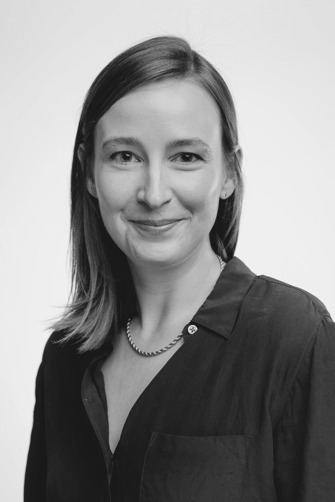
Katherine Jacobsen from the Committee to Protect Journalists (CPJ) advises journalists to have contingency plans if clashing with US authorities. Photo: CPJ
“We saw for the first time during the summer, the deportation of a journalist [Mario Guevara] who was detained in relation to his reporting and then transferred to ICE custody and ultimately deported back to his native El Salvador,” Jacobsen explains.
“He was in the country legally at the time of his detention. There are lots of other cases of individuals being targeted for their speech or for their work and ending up in the immigration system because of that. That should be really concerning.
“Newsrooms should be mindful of this when thinking about security around covering the World Cup and more broadly when sending their reporters to the United States.”
Another recent case, in March 2026, saw Estefany Rodríguez, a journalist for a Spanish-language outlet, who had been covering ICE immigration raids, arrested without her captors presenting a warrant. Her case has been widely reported around the world.
Jacobsen recommends that reporters at the World Cup should all have “a contingency plan”.
“Worst-case scenarios need to be worked through. What happens if a journalist is detained while covering covering a protest outside of a World Cup venue, for instance? And be hyper-vigilant of the changing political landscape in the United States and the polarisation that has made it very difficult for reporters to work in certain environments.”
Be careful with social media
The CPJ has issued an advisory that all reporters in the USA - and not just on sport - should consider using burner phones and be careful about using social media.
“Journalists should go through their social media and see what information is available out there about themselves, and also be very cognisant of any other comments that they might have made on social media websites, including liking a photo or a comment or anything like that - even on their personal sites - that the current administration might not agree with.”
“The US administration is smart enough to know the world will be watching,” said one source. “They won’t want any high-profile fuck-ups over perceptions of media freedom.”
Two sources to whom Play the Game spoke said that they had been advised to use burner phones during the World Cup, while a third said their company had told them to make sure their mobile phone was switched off while passing through immigration.
“We’ve been told the authorities cannot force us to switch on our phones, so if there’s anything on there they might not like, they won’t be able to see it,” they said.
Gianni Infantino has hitched FIFA's wagon to a MAGA World Cup, says Nick McGeehan from FairSquare. He does not expect the FIFA President to stand up for journalists if they are subject to mistreatment. Photo: Thomas Søndergaard / Play the Game.
Nick McGeehan of the human rights advocacy group, FairSquare, is concerned about the freedom of reporters at the World Cup:
“The Trump administration has been aggressive in its efforts to marginalise critical journalists and smear them as enemies of the MAGA project. At the same time, they have built a quasi-paramilitary force in ICE, who are as well-armed as they are poorly trained, and are likely to be deployed to host cities, many of which could be the site of protest against the US government.”
McGeehan finds that Gianni Infantino has hitched FIFA's wagon to a MAGA World Cup” and does not expect the FIFA President to stand up for journalists and the media if they are subjected to violence or mistreatment.
“As we saw in Brazil [at the 2014 World Cup\ and South Africa [in 2010], protests can often fade into the background when the football gets going, but it is clear that the conditions for serious unrest and violence exist.”
Consistent attacks on media rights
Clayton Weimers, the executive director of the USA arm of Reporters Without Borders, thinks that you can't separate the conditions for covering this World Cup from the broader conditions for journalism in the U.S. today.
“The Trump administration has consistently attacked press rights and access to information in very concrete ways … One of the ways that might impact journalists who are coming to cover the World Cup is that we've seen a lot of very heavy-handed policing of protests, for example, that has led to injuries for journalists and even arrests for journalists.”
Are journalists who cover the World Cup going to be freely able to cover those aspects of it because covering a World Cup is not just about covering what happens on the field?
“It's about what happens before, during, and after the games, inside and outside the stadiums. These tournaments are so much bigger than 90 minutes of football. And so, it's critical that FIFA really holds itself to account and holds its host countries to account on living up to its stated values that include press freedom and making sure that there is access.”
As for FIFA transparency, Weimers adds:
"FIFA has an uneven record when it comes to transparency and access. There are moments when it does the right thing and like any big organisation, there are moments when we don't think they're doing the right thing. In recent years, there have been issues with the availability of leadership at press conferences and for interviews and a very tightly controlled media availability in general. That is something we're strongly encouraging FIFA in public and in private to change.”
“This is the world's game. It belongs to the fans and if the folks who are running it from the very top are not available to those fans, then it sort of betrays the whole ideal of what the World Cup is supposed to represent.”
Weimers also stressed that the United States, by and large, still welcomes visitors from other countries:
“I don't want to intimidate people out of coming, but you have to be a little bit more aware of the conditions. You have to be prepared that there may be some tough questions asked of you at the border - that may feel inappropriate.
“But at the border, you are most vulnerable. It is unfortunately true that a border agent can ask you to unlock your devices and to look through them. If you're a journalist who works with sensitive sources, for instance, you might want to think about taking clean devices. You want to take every precaution to protect those folks.”
AIPS: no restrictions, but be careful
Rudy Nuyens, the chair of the football working group of AIPS (the International Sports Press Association), met with FIFA last week in Atlanta, Georgia, in the USA and said much of their discussions revolved around logistics such as press boxes, mixed zones and so on.
Mr Nuyens said he couldn’t answer all our questions but would go on the record in relation to two of them.
Are there any security requirements, restrictions, or risks journalists should expect when covering this World Cup, especially the US and Mexico?
“We briefly discussed this with the people at FIFA, and according to them, there are no restrictions. There are no journalistic restrictions.”
Are there any precautions journalists should take when traveling to the US or Mexico, for example, checking your social media, etcetera?
“That seems most important to me because as a journalist, you also have to apply for a visa. That's a whole file you have to complete and you're also asked for all your social media. You can say that you don't want to do that, but I don't think that's advisable at all, because I think that would just be a reason to search more. But politically tinged commentary on social media, that's what you have to be careful with.”
“How does one hold both the US government using the World Cup as a sports washing tool, and FIFA who facilitate this, to account?” ask investigative reporter Samindra Kunti before the FIFA World Cup in North America. Photo: Thomas Søndergaard / Play the Game.
Russia’s friendly face
Samindra Kunti, a freelance journalist based in Belgium, who has helped with this investigation, has covered multiple World Cups, and can compare the 2026 edition to Russia 2018 and Qatar 2022.
"Under Vladimir Putin, Russia hosted a tournament amid - or following - scandals ranging from sports doping to spy poisonings, political murders, the annexation of Crimea and repression of the press.
“At the time, Russia ranked 148th on RSF's world press freedom index. Journalists in Russia were confronting escalating violence that often occurred openly and went unpunished. Legal protections for reporters remained scarce. State censorship and intimidation - both physical and digital - were intensifying.”
“In an act of sportswashing, Russia showed a different face during the tournament. Organisers scaled back some of the visibility of the massive security operation that had accompanied the 2017 FIFA Confederations Cup – where FIFA accreditation limited reporters to “‘solely cover the FIFA Confederations Cup 2017 and related events.”
“During the World Cup 2018, they put on free trains for fans and media. This worked to show off the country - from St Petersburg to Kazan, Russia upheld a month-long facade to welcome the world and foreign reporters, who could largely work without intimidation or fear by the Russian state.”
Democracy in decline
Kunti calls the Qatar 2022 World Cup “the most controversial in modern sporting history - because of the way Qatar had won the rights to stage the finals and the plight of migrant workers who helped transform the Gulf Nation building infrastructure, often at the expense of their own lives.”
The reporting environment was hostile, Kunti recalls.
“This was exemplified at FIFA's main hotel in Lusail which became a fortress to keep nosey journalists out - only those with a specific appointment could enter, copying a media strategy from the IOC. It was difficult to pass the entry gate and inside the hotel lobby, security personnel monitored journalists. This reporter was kicked out repeatedly, even when he had an appointment. It turned out later that prostitutes had easier access to the hotel than journalists. Although, in Qatar, prostitution is criminalised.”
In the light of the past two World Cups, the United States, co-host of the 2026 World Cup, was seen as a safe haven, says Kunti. That all changed when Donald Trump returned to power for his second term.
“This summer sports media from around the world will once again be confronted with the question of how to cover a tournament that is being hosted by a democracy in decline. Trump has realised that the World Cup is the biggest TV show on earth, so how does one hold both the US government using the World Cup as a sports washing tool, and FIFA who facilitate this, to account?”
In less than three months, we may have an answer to that question from some of the more than 10,000 media professionals expected to cover the FIFA World Cup 2022. If, of course, they are allowed to work without restrictions.
Nick Harris is an investigative journalist and owner of Sporting Intelligence. In 2024, he received the Play the Game Award.


